

Advanced Knee Stem Cell Therapy and Platelet Rich Plasma Procedures
Living with knee issues like osteoarthritis, meniscus tear, or ACL tears can turn daily activities into painful challenges. Whether you experience stiffness in the morning, swelling after activity, or sharp pain with movement, knee pain can significantly impact your quality of life. Surgery is sometimes presented as the only solution, but there are less invasive options that target the underlying causes of knee pain without the risks of surgery.
Regenerative medicine procedures are non-surgical injection-based procedures for people suffering from knee pain due to common injuries to the knee meniscus, ACL, MCL, and other structures, or who are experiencing degenerative conditions such as Osteoarthritis. These procedures utilize concentrated repair cells that are obtained from your own bone marrow or blood to promote your body’s own natural ability to heal.
Your Alternative to Knee Surgery
Surgical options for those dealing with painful knee issues range from arthroscopic knee surgery to total knee joint replacement. Recent research has shown that some of the most popular arthroscopic surgeries, such as meniscectomy, provide little benefit to the patient. Knee replacement is extremely traumatic and carries risks of chronic pain and toxic wear particles entering the bloodstream. Surgical risks aside, all surgeries require months of painful rehab to regain strength and mobility. Most knee surgeries also accelerate the cascade of degeneration that leads to Osteoarthritis.
We have seen exciting results on difficult cases, such as complete muscle and ligament tears, and physicians in the licensed Regenexx network have helped thousands of patients with arthritis avoid knee replacement and continue to do the things they love with little or no pain. Most patients experience little downtime from their procedure using Regenexx injectates and are encouraged to return to activity as they begin to feel better.
Your physician will determine if you are, or are not, a candidate for these procedures and recommend surgery if that’s what’s needed.
Arthritis
Meniscus tear
ACL, PCL sprain or tear
MCL, LCL sprain or tear
Tendinopathy
Joint replacement alternative


There are more than 23786 Regenexx knee patients being tracked in the Regenexx® Provider Patient Registry.
Up to 76% Average Function Regained
45% Decrease in Joint Pain After 1-Month
51% Overall Improvement After 3-Months
Knee Function Improvement After Procedure Using Regenexx Injectates
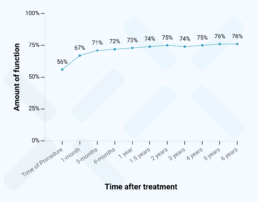
Prior to treatment, patients report being limited to an average of 56% of their optimal function. After receiving treatment, they report averages up to 76%. The functional questionnaire represented here is the Lower Extremity Functional Scale (LEFS).
All functional scores have been normalized to a scale of 0 – 100 for observation.
Data updated September 03, 2025.
Knee Pain Decrease After Procedure Using Regenexx Injectates
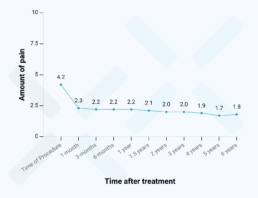
Prior to receiving treatment, patients report average pain of 4.2/10. One month after treatment, pain levels decrease to an average of 2.7/10, a decrease of 36%. The questionnaire used is the Numeric Pain Scale (NPS).
Data updated September 03, 2025.
Overall Knee Improvement After Procedure Using Regenexx Injectates
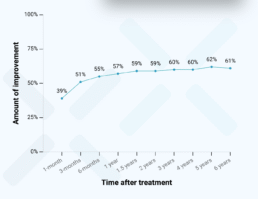
Patients feel their joints are, on average, already 39% better after only 1-month, and continue to improve from there. The questionnaire used is the Single Assessment Numeric Evaluation (SANE).
Data updated September 03, 2025.
For knee issues like osteoarthritis, meniscus tears, or ACL tears, common treatments like physical therapy, anti-inflammatory medications, and corticosteroid injections may provide temporary relief by reducing pain and inflammation. Unfortunately, these approaches often do not address the root causes of the pain, which means pain may persist or even worsen over time if underlying tissue or joint issues remain untreated. When conservative care or common treatments no longer offer enough relief, surgery is often suggested.
Yet, options like knee replacement, meniscus surgery, or ACL repair come with challenges, including a lengthy recovery period, limited knee mobility, and the possibility of complications like infection or blood clots. While surgery can reduce pain, it may not fully restore joint function. After knee surgery, some people may experience changes in the joint over time, including stiffness or other functional issues that may require further treatment or additional surgery.
Regenerative orthopedic procedures strive to help the body heal itself by enhancing its natural healing mechanisms where necessary.
Our orthopedic patients benefit from the expertise of a board-certified physician who handles both their evaluation and their procedure. Patients receive a treatment plan customized to their specific condition or injury needs. Our non-surgical regenerative procedures are informed by research, utilize leading biotechnology, and are supported by over 19 years of patient results. These injection-based procedures require less downtime compared to surgery, and patients return to normal daily activities as tolerated. Most resume light activities and work after 5 to 7 days and return to sports at 6 to 8 weeks.
Regenexx Overview Webinar
Procedures using Regenexx injectates use your body’s natural healing abilities to help repair damage to bones, muscles, cartilage, tendons, and ligaments. Regenexx’s proprietary, research-based methods and patented protocol allow us to concentrate your cells and apply them precisely to your injured area.
How Regenexx Procedures Work
Regenexx SD injectate is Bone Marrow Concentrate, which contains stem cells. These repair cells from your own body live inside all of us in various tissues, poised to leap into action to repair damage as it occurs. As we age or have big injuries, we may not be able to recruit enough of these cells to the site to fully repair the area. The procedure using Regenexx SD injectate helps overcome this problem by harvesting Bone Marrow from an area of the back of the hip that contains a dense population of these important cells and then concentrating those cells before precisely injecting them into the injured area using advanced imaging guidance. The goal of the procedure is to reduce pain and improve function by promoting the body’s own ability to heal naturally. This Patented Bone Marrow Concentrate Protocol can be used for a wide range of orthopedic conditions. Your doctor will evaluate your condition and your imaging to determine whether a bone marrow concentrate or platelet-based treatment is the best option for your orthopedic condition.
Platelet Rich Plasma (PRP) and Platelet Lysate are Platelet procedures that contain healing growth factors from your own blood that promote your body’s natural ability to repair itself. The use of PRP to treat joint, tendon, ligament, and muscle injuries is becoming well known, thanks to exposure from professional athletes. Platelet injections have a stimulating effect on the repair cells within the targeted area, making those cells work harder to perform their natural job of healing the body.
Like all procedures using Regenexx injectates, this procedure is performed with high-level image guidance to ensure the most accurate placements of cells into the desired area. Procedures using Regenexx SCP injectate are more concentrated and purer than PRP created by the typical machines used at most regenerative medicine clinics. This increases its ability to stimulate the body’s natural healing response. Platelet procedures are commonly used for soft tissue injuries, mild arthritis, spine conditions, and around nerves.