
How Does Arthroscopy Work?
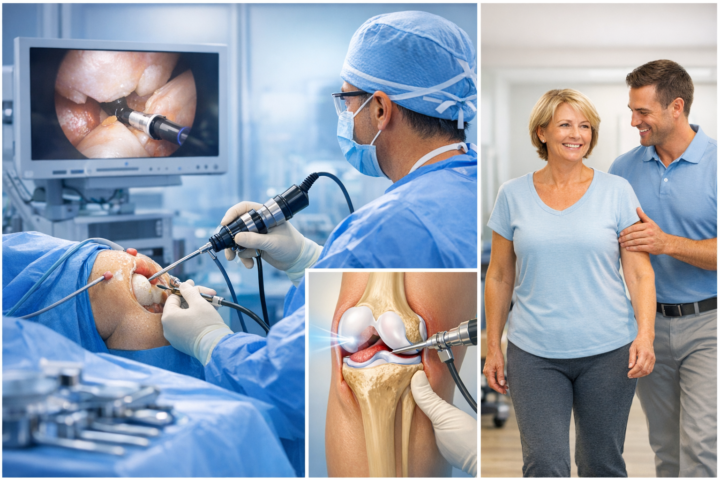
Arthroscopy involves the use of a device called an arthroscope—a thin, flexible tube equipped with a fiber-optic camera and light. Because the arthroscope is so small, it can be inserted through a tiny incision the size of a buttonhole.
The camera projects a high-definition image of the inside of your joint onto a screen, allowing your specialist to see the cartilage, ligaments, and bones in great detail. If damage is found, tiny surgical instruments can be inserted through additional small incisions to repair the tissue immediately.
If you suffer from persistent joint pain, talk to a pain specialist in New York. Dr. Ilana Etelzon is board-certified in Physical Medicine and Rehab/Interventional Pain Management. She utilizes advanced diagnostic tools to determine if minimally invasive procedures like arthroscopy are the right path for your recovery.
What Arthroscopic Procedures Are Available?
Arthroscopy can be performed on almost any joint in the human body. The most common procedures include:
Knee Arthroscopy
Commonly used to treat meniscus tears, ACL injuries, and cartilage damage.
Shoulder Arthroscopy
Effective for rotator cuff tears, labral tears, and shoulder impingement.
Hip Arthroscopy
Treats labral tears, femoroacetabular impingement (FAI), and synovitis.
Wrist & Ankle
Used for carpal tunnel release, loose bone fragments, and ligament repairs.
If you’ve felt nagging joint pain that doesn’t respond to conservative treatment or physical therapy, talk to a pain specialist like Dr. Etelzon.


Arthroscopy is typically an outpatient procedure, meaning you can go home the same day. Once Dr. Etelzon reaches a diagnosis and recommends arthroscopy, she discusses the treatment with you. You can expect:
- Anesthesia (local, regional, or general) will be administered to ensure you are comfortable and pain-free.
- Small incisions (portals) are made to insert the camera and instruments.
- Sterile fluid flows through the joint to expand it, giving the surgeon a clear view.
- The procedure usually takes between 30 minutes to 2 hours, depending on complexity.
- Recovery involves the R.I.C.E. method (Rest, Ice, Compression, Elevation) and physical therapy.
Arthroscopy is typically an outpatient procedure, meaning you can go home the same day. Once Dr. Etelzon reaches a diagnosis and recommends arthroscopy, she discusses the treatment with you. You can expect:
Anesthesia (local, regional, or general) will be administered to ensure you are comfortable and pain-free.
Small incisions (portals) are made to insert the camera and instruments.
Sterile fluid flows through the joint to expand it, giving the surgeon a clear view.
Your pain management doctor to inject the medicine into several spots in the joint if necessary
The procedure usually takes between 30 minutes to 2 hours, depending on complexity.
Recovery involves the R.I.C.E. method (Rest, Ice, Compression, Elevation) and physical therapy.
Compared to traditional open surgery, arthroscopy offers significant advantages:
Faster Recovery Time
Less Post-Op Pain
Return to Activities Sooner
Minimal Scarring
Outpatient Procedure
Precise Diagnosis
Arthroscopy improves the quality of your life and allows you to resume your normal routines. Contact Dr. Etelzon in NYC for advanced and individualized pain treatment procedures.