

Hip Labral Tear
Labral Tear Treatment That Finds the Root Cause
A pinch in the front of the hip when you squat. Clicking when you pivot. A deep ache after a run, a dance class, or a long day in the car. An MRI shows a labral tear, and suddenly surgery is on the table. Dr. Ilana Etelzon finds what is actually driving your hip pain and treats that, so you can get back to moving the way you want.
Double Board-Certified
Regenexx-Certified Provider
Ultrasound & X-Ray Guided
4 Offices in NY & NJ

Why it still hurts
Many labral tears on MRI cause no pain at all
The labrum is a ring of cartilage around the rim of the hip socket. It deepens the socket, seals in joint fluid, and helps keep the ball of the hip stable. Tears happen with twisting sports, repeated deep bending, or simply over time, and they show up often on hip MRIs. A study of adults with no hip pain at all found labral tears in about two thirds of them.
So a tear on your MRI cannot explain your pain on its own. Hip pain with a labral tear often comes from the stress around it: a bony shape that pinches the joint, a hip that has become loose, irritated tendons in the front of the hip, weak muscles, or the lower back. Finding which of those is active decides what will actually help.
Pain that keeps coming back has a reason. Finding it comes first.
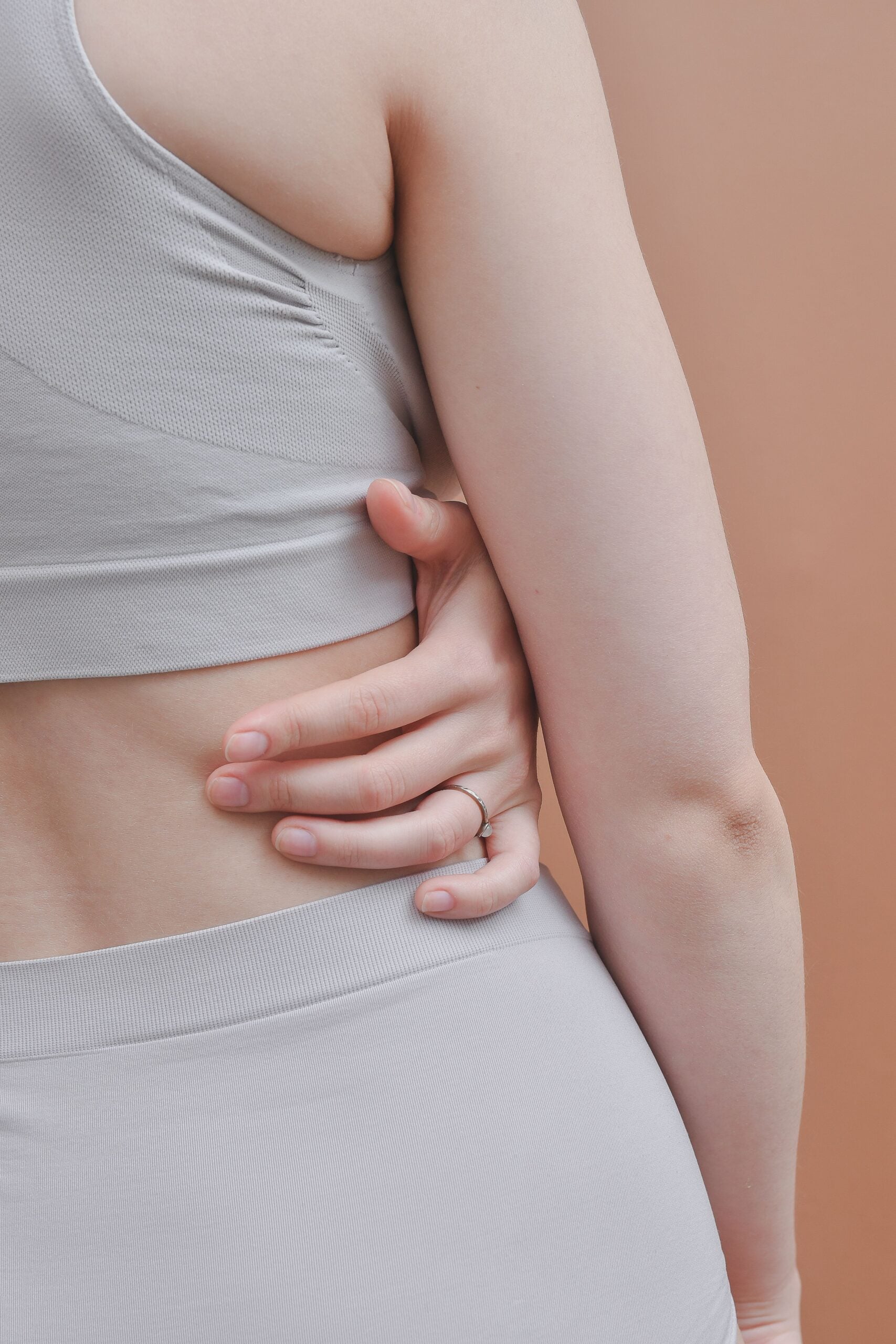
The root causes
Six things that drive labral tear pain
Most painful hips with a labral tear have more than one of these at work. That is why rest alone rarely settles things, and why your plan should match your own mix.
1
The tear itself
Torn labral tissue can catch and irritate the joint, causing clicking, locking, and a sharp pinch in the groin.
2
Hip impingement
Extra bone on the ball or socket, called femoroacetabular impingement, makes the joint pinch the labrum with deep bending and twisting.
3
A loose or unstable hip
Stretched ligaments or a shallow socket let the ball shift, which puts repeated stress on the labrum.
4
Irritated hip-flexor tendons
The iliopsoas tendon crosses the front of the hip and can snap and ache over a torn labrum.
5
Weak hip and core muscles
When the deep hip and core muscles fall behind, the joint loses control and the labrum takes the load.
6
Early joint wear
Some labral tears come with early cartilage wear, which changes both the plan and the outlook.
Step one: Reveal
How Dr. Etelzon finds what is driving your hip pain
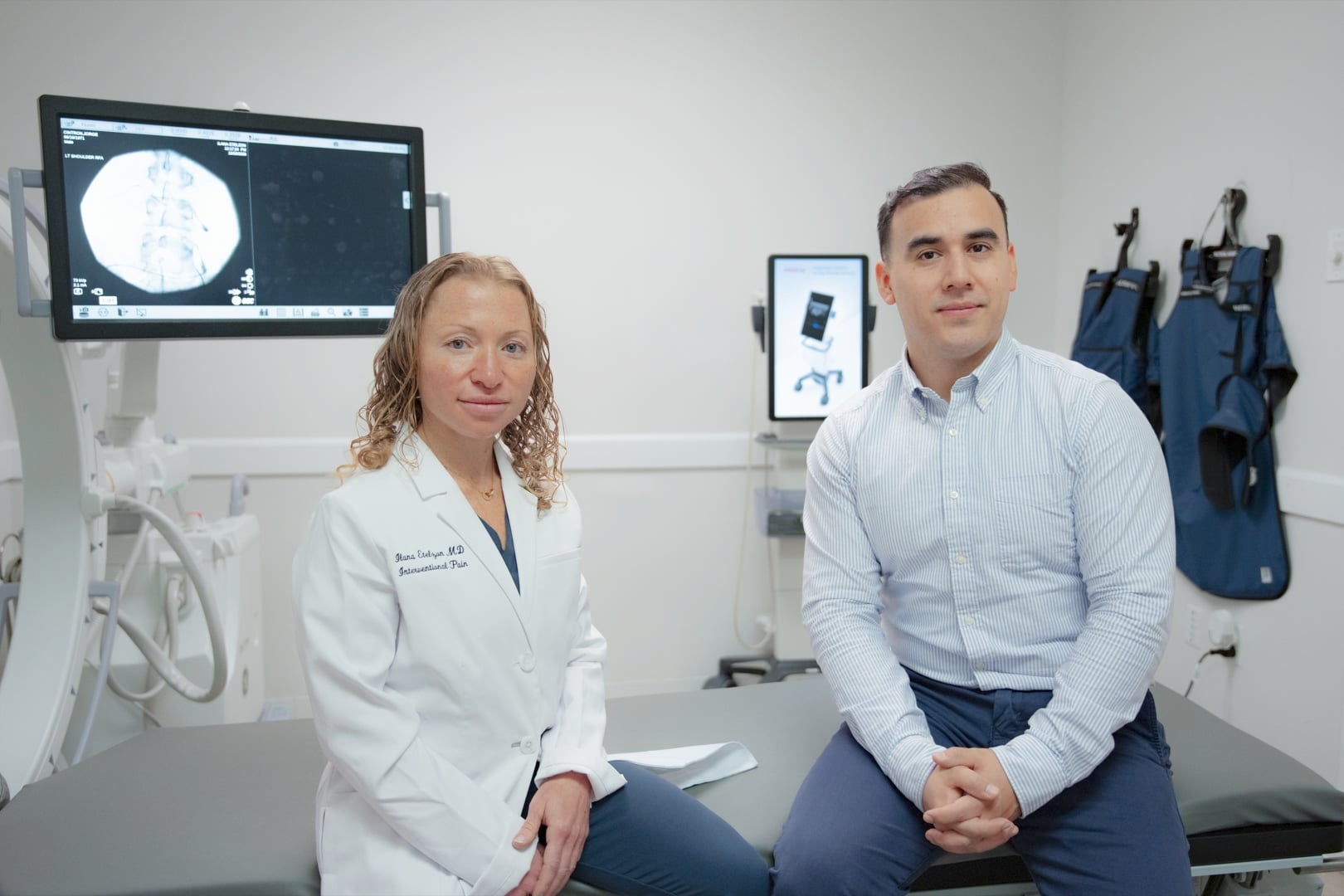
Your first visit is built around one question: what is keeping this hip from settling down? Dr. Etelzon answers it with the same careful steps every time.
- Your storyWhen it started, which motions hurt, the sports and activities you love, and what you have tried.
- A hands-on examShe tests for impingement, hip stability and strength, the hip-flexor tendon, and your lower back.
- Ultrasound in the roomIn-office ultrasound shows fluid, tendon irritation, and snapping in real time, while you move.
- Your imaging, read closelyShe reviews your MRI or MR arthrogram and your X-ray, including the shape of the hip bones.
You leave knowing which drivers are at work in your hip and what each part of your plan is for.
Reveal
Find every driver
Diagnose all the sources of pain before treating any of them.
Repair
Treat the tissue
Image-guided regenerative care aimed at the damaged structures.
Restore
Rebuild control
Strength and movement work so the area holds up under load.
Renew
Get back to life
Return to your activities and stay there.
Step two: Repair
Treatment matched to what is actually wrong
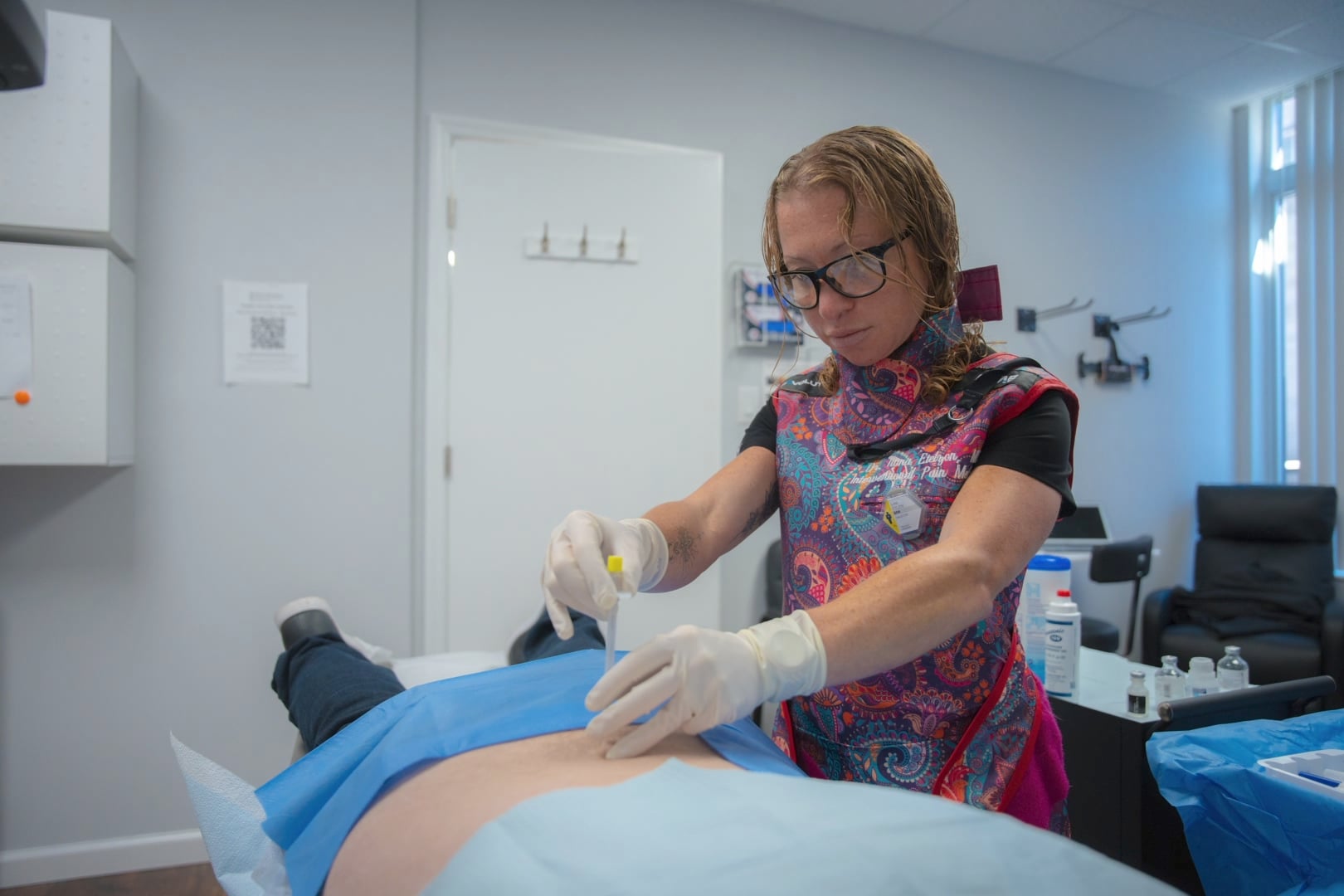
Once the drivers are clear, Dr. Etelzon chooses treatments that aim at them directly. Hip injections are placed under ultrasound or X-ray guidance, so they reach the joint and tendons precisely.
PRP Injections
Concentrated platelets from your own blood, placed in the joint to calm inflammation and support healing of the labrum and surrounding tissue.
Learn about PRP injections ›Bone Marrow Concentrate
Cells drawn from your own bone marrow, used when the tear comes with early cartilage wear or the joint needs more support.
Learn about stem cell injections ›Regenexx Protocols
Dr. Etelzon is a certified Regenexx provider, so your injections follow tested, standardized protocols used across a national network of physicians.
Learn about Regenexx ›MLS Laser Therapy
A focused laser that calms inflammation in the front of the hip. It is often paired with injections.
Learn about MLS laser therapy ›Shockwave Therapy
Acoustic waves that help stubborn hip-flexor and gluteal tendon pain, which often travels with a labral tear.
Learn about shockwave therapy ›Strength and Movement Plan
Targeted work for the deep hip and core muscles, plus movement changes that keep the joint from pinching the labrum.
See our regenerative procedures ›Where surgery fits
Arthroscopic labral repair helps some patients, especially when a bony shape keeps pinching the joint. Many people with labral tears improve without it. Dr. Etelzon will tell you plainly if your hip is better served by a surgeon, and refer you to one.
Every type
What can help, by type of tear
Labral tears vary in size, cause, and how much they affect the joint. The type guides the plan, and your drivers decide it.
Mild
Fraying and small tears
Wear and fraying with pain after activity. Movement changes, PRP, and a strength plan often settle the hip.
Moderate
Larger tears with instability
A torn labrum in a loose hip. PRP placed in the joint plus stabilizing work can reduce catching and pain for many patients.
Complex
Tears with impingement or early arthritis
When bone shape or cartilage wear is part of the picture, the plan gets more targeted. If surgery would serve you better, Dr. Etelzon will say so.
An honest note. Injections cannot reshape bone or stitch a torn labrum back in place. The goal is a calmer, stronger hip that lets you do what you love.
Results
Outcomes tracked across the Regenexx network
Regenexx collects patient-reported outcomes from certified clinics across the country. Explore the live results below.
Like all medical procedures, regenerative procedures have a success and failure rate. Individual results vary.
Step four: Renew


Back to moving the way you want
Patients come to us wanting specific things back: a deep squat at the gym, a dance class, a run without the pinch, a long drive without the ache. That is what we treat toward.
Back at the barre
Deep stretches without the pinch
Your first visit
What to expect, and what it costs
Your first visit is a consultation with Dr. Etelzon: your history, a hands-on exam, ultrasound, and a review of your imaging. Bring any hip MRIs or X-rays you have. If treatment makes sense, you leave with a written plan and a clear price before anything is scheduled. Dr. Etelzon also treats labral tears of the shoulder with the same approach.
Most regenerative procedures, including PRP and bone marrow concentrate, are not covered by insurance. Many patients use HSA or FSA funds, and monthly financing is available. See our payment and financing options.
Find us
Labral tear treatment across New York and New Jersey
Dr. Etelzon and her team treat hip pain at four offices, so care is close to where you live and work.
New York
Brooklyn
2577 East 17th Street, 1st Floor Unit 18B, Brooklyn, NY 11235Brooklyn office › New JerseyClifton
1111 Paulison Ave, Unit 2, Clifton, NJ 07011Clifton office › New JerseyNewark
73-75 Ferry St, Newark, NJ 07105Newark office › New JerseyPerth Amboy
345 State St, Unit B, Perth Amboy, NJ 08861Perth Amboy office ›Call 1 (844) 959-7246 to reach any office.
Keep reading
More on hip pain and regenerative care
References
- Register B, et al. Prevalence of abnormal hip findings in asymptomatic participants: a prospective, blinded study. American Journal of Sports Medicine. 2012;40(12):2720-2724.
Find out what is driving your hip pain
One visit, a clear answer, and a plan built around your hip and the life you want back. This is where the trying stops.