

Hip Arthritis
Hip Arthritis Treatment That Finds the Root Cause
Putting on socks. Getting out of the car. A morning walk that turns into a limp by the end. Hip arthritis chips away at the things you do without thinking, and pain pills only dull it. Dr. Ilana Etelzon finds what is actually driving your hip pain and treats that, so you can keep moving without rushing into a hip replacement.
Double Board-Certified
Regenexx-Certified Provider
Ultrasound & X-Ray Guided
4 Offices in NY & NJ

Why it still hurts
Hip pain and a hip X-ray often disagree
Hip osteoarthritis is the gradual wearing down of the cartilage that lines the ball and socket of the hip joint. It becomes more common after 50 and is one of the leading reasons adults lose mobility. A large study in the BMJ found that X-rays and hip pain line up poorly. Many people with hip pain showed little wear on X-ray, and many with clear wear on X-ray had no hip pain at all.
That gap matters. Pain from an arthritic hip can come from the joint itself, the bone under the cartilage, the tendons and bursa on the outside of the hip, the muscles that steady your pelvis, or even the lower back. Treatment aimed only at the joint, or only at the pain, misses the part that keeps you sore.
Pain that keeps coming back has a reason. Finding it comes first.

The root causes
Six things that drive hip arthritis pain
Most painful arthritic hips have more than one of these at work at the same time. That is why a single shot rarely settles things for long, and why your plan should match your own mix.
1
Worn cartilage
The smooth lining of the ball and socket thins and roughens, so the joint absorbs load less evenly. Stiffness and a deep groin ache are often the first signs.
2
Stressed bone under the cartilage
As cartilage thins, the bone beneath takes more force and can develop bone marrow lesions, areas of swelling visible on MRI and invisible on X-ray.
3
An inflamed joint lining
The lining of the hip joint can swell and produce extra fluid, adding to the stiffness you feel after sitting for a while.
4
Irritated outer-hip tendons
The gluteal tendons and bursa on the outside of the hip are a frequent and often missed source of pain that makes lying on your side hard.
5
Weak hip and core muscles
When the muscles that steady your pelvis fall behind, the joint takes extra force with every step and a limp sets in.
6
Pain coming from the lower back
A pinched nerve or worn joint in the lower back can send pain into the hip and buttock, and it is easy to mistake for hip arthritis.
Step one: Reveal
How Dr. Etelzon finds what is driving your hip pain
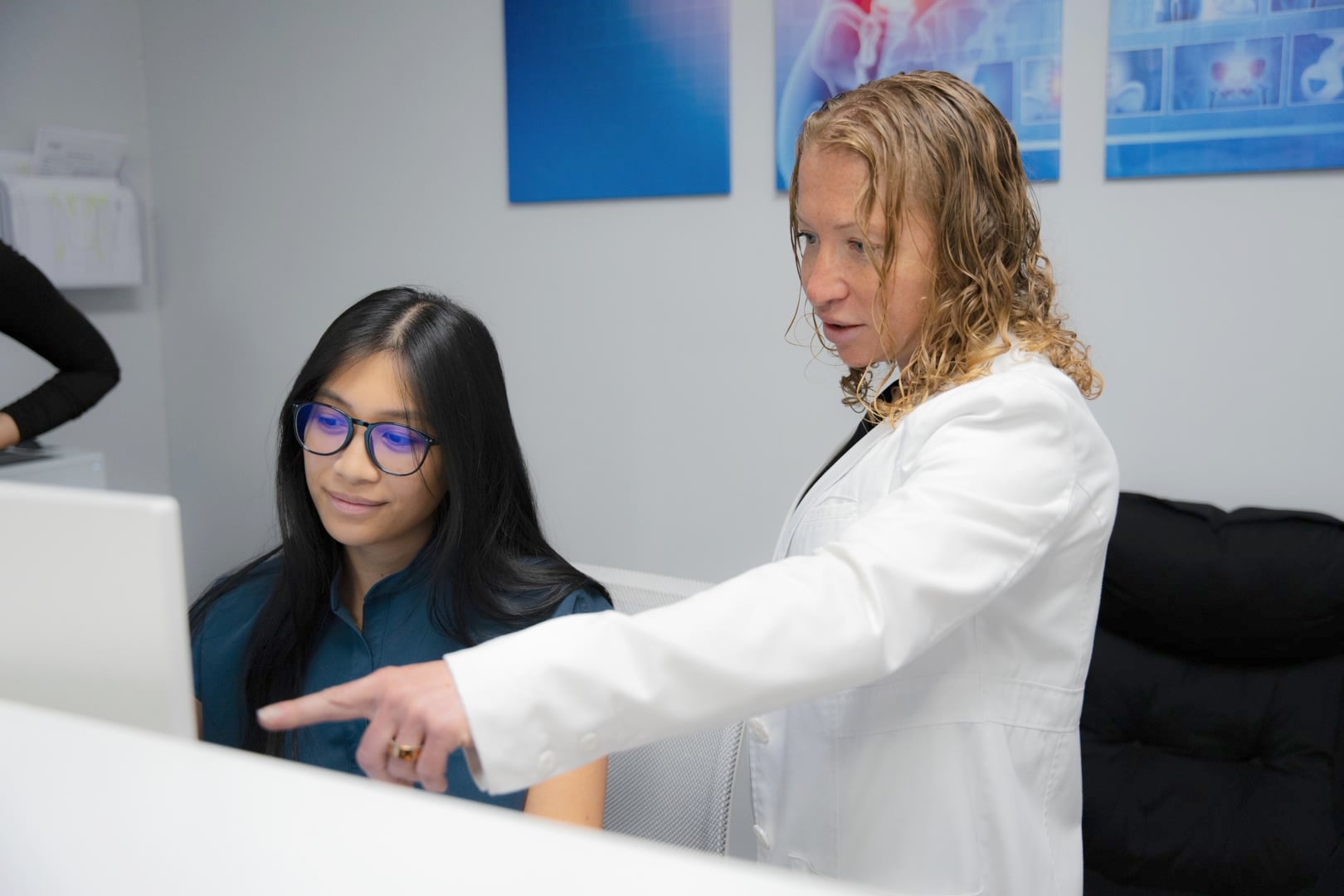
Your first visit is built around one question: what is keeping this hip from settling down? Dr. Etelzon answers it with the same careful steps every time.
- Your storyWhen it started, where it hurts, what makes it worse, what you have tried, and what you want to get back to.
- A hands-on examShe checks hip rotation and strength, the outer-hip tendons, how you walk, and your lower back.
- Ultrasound in the roomIn-office ultrasound shows fluid in the joint and irritation in the tendons and bursa around it.
- Your imaging, read closelyShe reviews your X-ray and, when needed, your MRI, which can show the bone marrow lesions an X-ray misses.
You leave knowing which drivers are at work in your hip and what each part of your plan is for.
Reveal
Find every driver
Diagnose all the sources of pain before treating any of them.
Repair
Treat the tissue
Image-guided regenerative care aimed at the damaged structures.
Restore
Rebuild control
Strength and movement work so the area holds up under load.
Renew
Get back to life
Return to your activities and stay there.
Step two: Repair
Treatment matched to what is actually wrong
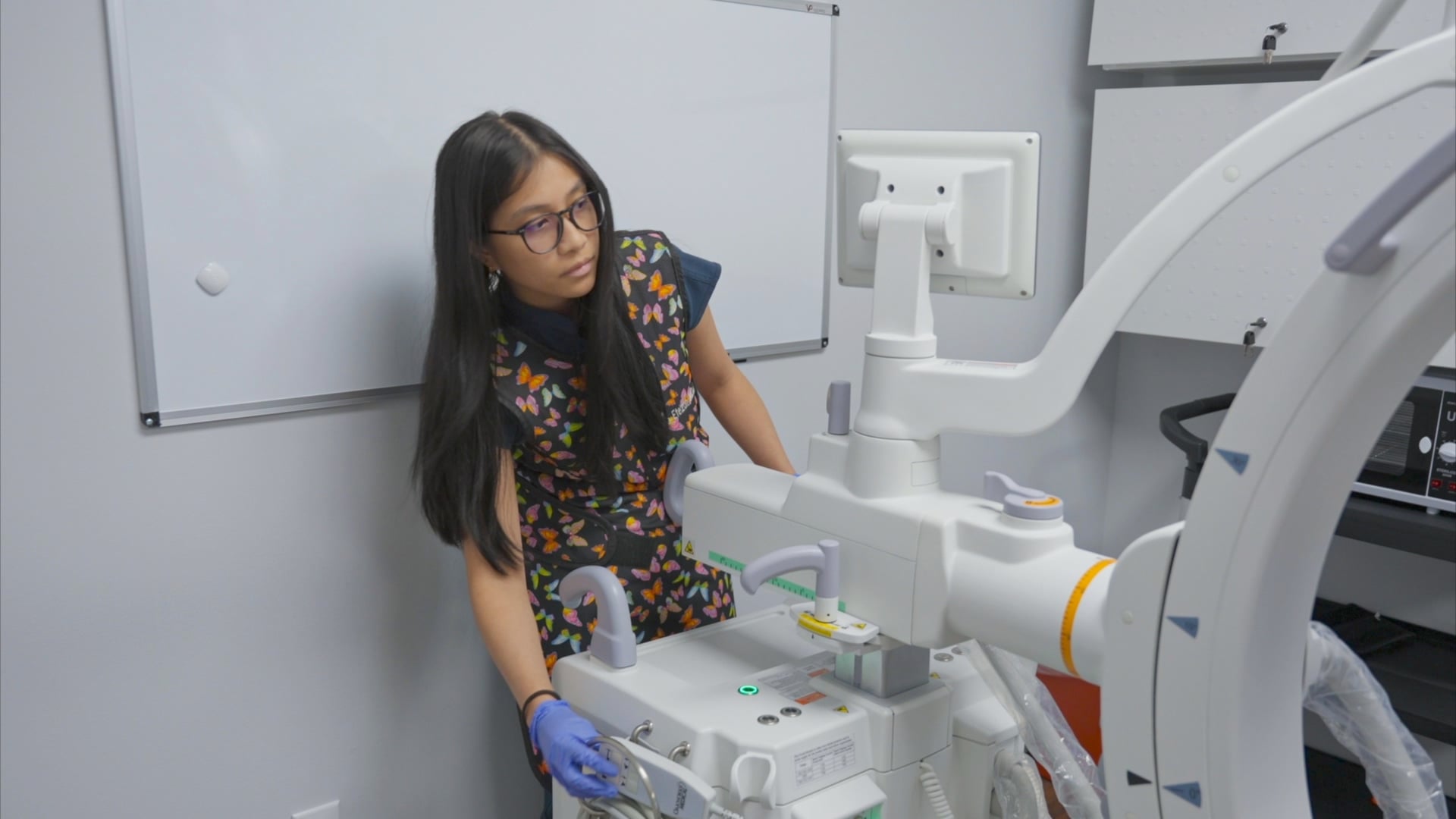
Once the drivers are clear, Dr. Etelzon chooses treatments that aim at them directly. Hip injections are placed under X-ray or ultrasound guidance, so they reach the deep joint and tendons precisely.
PRP Injections
Concentrated platelets from your own blood, used to calm an inflamed hip joint and the irritated tendons around it. Often a strong fit for mild to moderate arthritis.
Learn about PRP injections ›Bone Marrow Concentrate
Cells drawn from your own bone marrow, used for more advanced hip arthritis and for bone marrow lesions beneath the cartilage.
Learn about stem cell injections ›Regenexx Protocols
Dr. Etelzon is a certified Regenexx provider, so your injections follow tested, standardized protocols used across a national network of physicians.
Learn about Regenexx ›MLS Laser Therapy
A focused laser that reduces inflammation and pain in the tissues around the hip. It is often paired with injections.
Learn about MLS laser therapy ›Shockwave Therapy
Acoustic waves that boost blood flow to stubborn outer-hip tendon pain, one of the most common hidden drivers.
Learn about shockwave therapy ›Strength and Movement Plan
Exercises that rebuild the muscles that steady your pelvis, so the hip takes less force with every step.
See our regenerative procedures ›Where cortisone fits
Cortisone can quiet a painful hip flare for a few weeks, and it has a place. Its relief tends to fade, and repeated shots are hard on joint tissue, so Dr. Etelzon uses it sparingly. She will tell you plainly which options make sense for your hip, including when a hip replacement is the right call.
Every stage
What can help at each stage of hip arthritis
Hip arthritis is graded from mild to severe based on imaging. The grade guides the plan, and your drivers decide it. Read more about the four stages of osteoarthritis.
Grades 1 to 2
Early arthritis
Mild wear with stiffness and pain that comes and goes. This is the best window to act. PRP, laser therapy, and a strength plan often calm the hip and keep you moving.
Grade 3
Moderate arthritis
Clear cartilage loss and more frequent pain. PRP and bone marrow concentrate aimed at the specific drivers can reduce pain and improve walking for many patients.
Grade 4
Advanced arthritis
Severe wear, often with lost motion. Some advanced hips still respond, especially when outer-hip tendons or bone marrow lesions drive the pain. When a hip replacement is the better choice, Dr. Etelzon will tell you so.
An honest note. Injections cannot regrow a fully worn joint surface. The goal of regenerative care is less pain, better movement, and more years with your own hip.
Results
Outcomes tracked across the Regenexx network
Regenexx collects patient-reported outcomes from certified clinics across the country. Explore the live results below.
Like all medical procedures, regenerative procedures have a success and failure rate. Individual results vary.
Step four: Renew


Back to the things your hips are for
Patients come to us wanting specific things back: a long walk without a limp, a fitness class with friends, getting down on the floor and back up, a full night of sleep on their side. That is what we treat toward.
Back in class with friends
Moving freely outdoors
Your first visit
What to expect, and what it costs
Your first visit is a consultation with Dr. Etelzon: your history, a hands-on exam, ultrasound, and a review of your imaging. Bring any hip X-rays or MRIs you have. If treatment makes sense, you leave with a written plan and a clear price before anything is scheduled.
Most regenerative procedures, including PRP and bone marrow concentrate, are not covered by insurance. Many patients use HSA or FSA funds, and monthly financing is available. See our payment and financing options.
Find us
Hip arthritis treatment across New York and New Jersey
Dr. Etelzon and her team treat hip pain at four offices, so care is close to where you live and work.
New York
Brooklyn
2577 East 17th Street, 1st Floor Unit 18B, Brooklyn, NY 11235Brooklyn office › New JerseyClifton
1111 Paulison Ave, Unit 2, Clifton, NJ 07011Clifton office › New JerseyNewark
73-75 Ferry St, Newark, NJ 07105Newark office › New JerseyPerth Amboy
345 State St, Unit B, Perth Amboy, NJ 08861Perth Amboy office ›Call 1 (844) 959-7246 to reach any office.
Keep reading
More on hip pain and regenerative care
References
- Kim C, et al. Association of hip pain with radiographic evidence of hip osteoarthritis: diagnostic test study. BMJ. 2015;351:h5983.
Find out what is driving your hip pain
One visit, a clear answer, and a plan built around your hip and the life you want back. This is where the trying stops.