

Osteoarthritis moves through four stages, from faint cartilage wear you may never feel to bone rubbing on bone. Knowing your stage tells you which options are still open, and for most people, that list is longer than they were told. Here is what each stage looks like, what it feels like, and how the team at Pain Doctors Medical helps patients get back to the walks, gardens, and pickleball courts they miss.
What Osteoarthritis Is and What Causes It
Osteoarthritis is the gradual breakdown of the cartilage that cushions the ends of your bones. Most people picture simple wear and tear. Alexandra DeFrance, PA-C, a board-certified physician assistant specializing in orthopedics and regenerative medicine at Pain Doctors Medical, sees something more active going on.
“Everyone pictures arthritis like the tread wearing off an old tire. That’s part of it. What I actually see in the exam room is inflammation. The joint gets irritated, it calls in the inflammatory cells to clean things up, and then those cells overstay their welcome and start chewing on the cartilage. Age sets the stage. An old ski injury can set the stage. And sometimes you can thank your mother for your knees.”
Those three drivers, age, past injury, and genetics, explain why two people with the same birthday can have very different joints. A torn meniscus at 30 can show up as arthritis at 50. A family history can speed the timeline along.
The 4 Stages, From Minor to Bone on Bone
Clinicians grade osteoarthritis on a scale of one to four, usually by reading an X-ray alongside your symptoms.
“We grade it one through four. A one is barely anything, maybe a little narrowing on the X-ray that you’d never feel. A four is bone on bone. Patients will say ‘my doctor told me I’m bone on bone’ like it’s a verdict. It’s a description. It tells me where we’re starting.”
Stage 1: Minor
Cartilage shows the first small signs of wear, and tiny bone spurs may start to form. Most people feel nothing, or a little stiffness after a long day on their feet. This stage usually turns up by accident on an X-ray taken for something else.
Stage 2: Mild
Bone spurs become visible on imaging, though the space between the bones still looks close to normal. The joint starts to talk back: stiffness after sitting through a movie, an ache after a long walk, a knee that needs a minute to warm up in the morning.
Stage 3: Moderate
The cartilage thins noticeably, and the joint space narrows. Inflammation becomes a regular visitor, so swelling, pain with stairs or kneeling, and a creaky, grinding feeling are common. This is often when people start quietly editing their lives, skipping the hike or choosing the restaurant with the closest parking.
Stage 4: Severe
Most of the cartilage is gone, and bone meets bone. Pain can show up at rest and at night, and imaging sometimes reveals bone marrow edema, a kind of bruise inside the bone. This is the stage where a joint replacement usually enters the conversation.
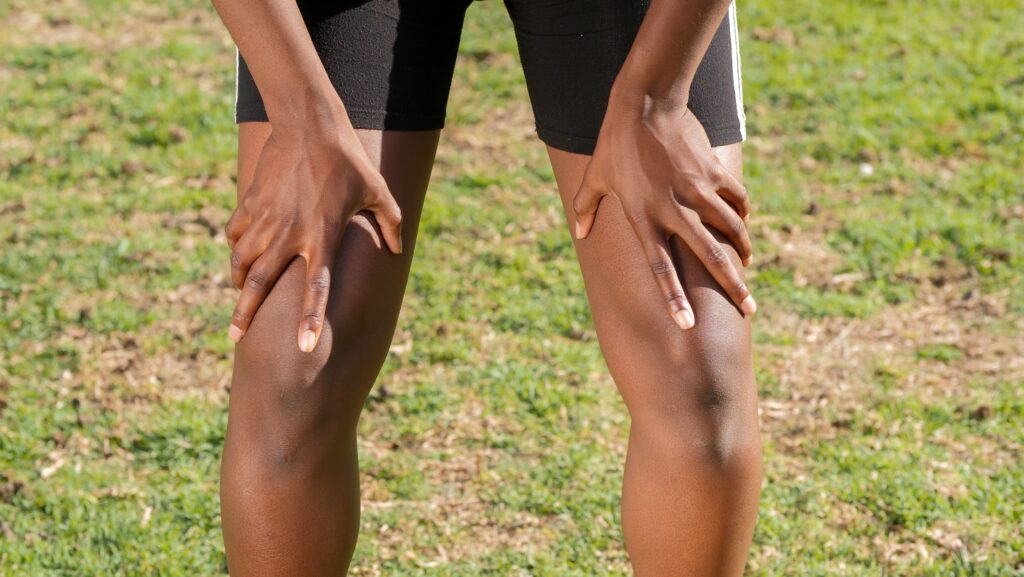
The Best Treatment for Osteoarthritis Starts With Calming the Joint
If inflammation drives the damage, quieting it is the first job. DeFrance puts regenerative medicine at the top of her list.
“My goal is to calm the joint down. That’s what regenerative medicine does well. We take your own platelets, or your own cells, and put them exactly where the damage is, so the joint starts getting signals to repair instead of signals to keep fighting. Keep the inflammatory cells out of the room and the whole joint behaves differently.”
At Pain Doctors Medical, treatment follows a four-part approach: Reveal, Repair, Restore, Renew. The first visit focuses on finding the true pain driver. From there, care is built around four core therapies:
- PRP injections concentrate growth factors from your own blood and place them into the joint, tendon, or ligament under image guidance. PRP often fits well in stages one through three.
- Bone marrow concentrate injections use your own cells, processed under the Regenexx protocol, and are typically considered for more advanced joints.
- MLS laser therapy calms inflammation and improves circulation around the joint, creating a better environment for repair.
- Shockwave therapy sends acoustic pressure waves into sore tissue to boost blood flow and support recovery in the tendons and ligaments around the joint.
Every injection is performed under ultrasound guidance, so the treatment lands where the problem lives.
From Bone on Bone Back to Pickleball
Stage four sounds final. One of DeFrance’s patients would disagree.
“She came in with a date on the calendar for a knee replacement. Bone on bone, and the X-ray was not subtle about it. She wanted one more opinion before she handed her knee over. We did stem cells and PRP into the joint, into the ligaments around it, so the knee would feel stable again, and into the bone itself, because her MRI showed bone marrow edema. That’s basically a deep bruise inside the bone, and it throbs. She got real relief. She canceled the surgery. Last I heard, she was back playing pickleball, and from what I’m told, talking a little trash on the court.”
Results vary from person to person, and not every stage four joint is a candidate. A thorough evaluation is how you find out which group you’re in.
Find Out Your Stage
The earlier you know your stage, the more options you keep. Pain Doctors Medical treats osteoarthritis at offices in Brooklyn, Newark, Perth Amboy, and Clifton, led by Dr. Ilana Etelzon, MD, a double board-certified physician in Physical Medicine and Rehabilitation and Interventional Pain Management. Take the Pain Quiz or book a consultation to learn where your joint stands and what it will take to get you moving again.